
Should I Rinse Dishes Before Putting Them in the Dishwasher?
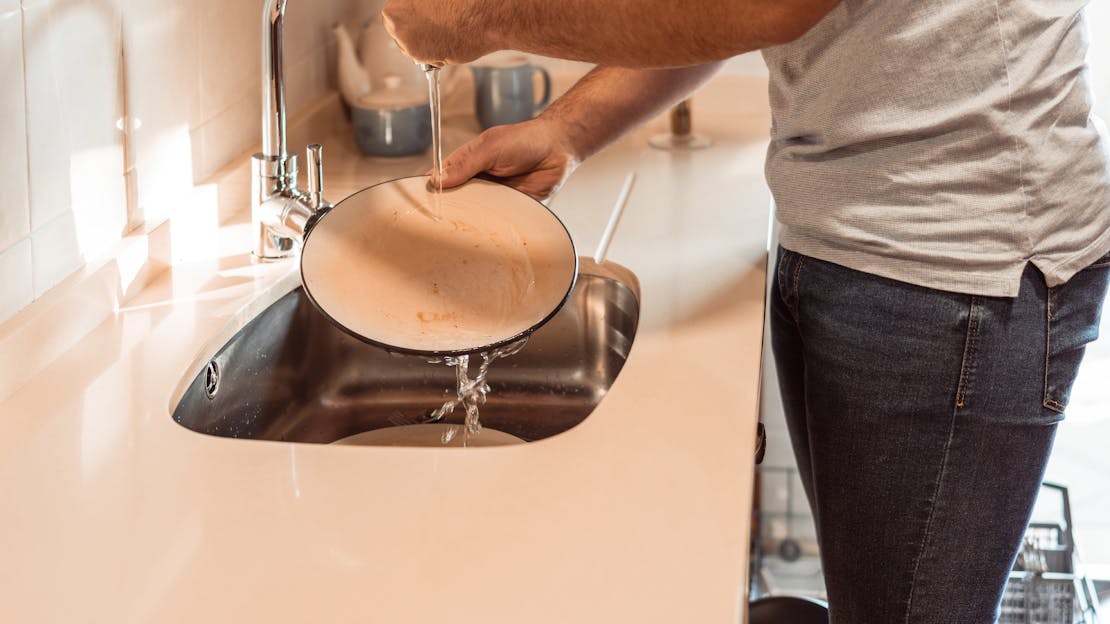
Many people still rinse their plates, bowls and cutlery before loading the dishwasher. It feels like the right thing to do, but with modern dishwashers and detergents, pre-rinsing is often unnecessary and can actually waste water and time.
In this guide, we’ll explain whether you really need to rinse dishes before using the dishwasher, when it might still be helpful, and how to get the best cleaning performance from your appliance.
Do You Need to Rinse Dishes Before Dishwashing?
In most cases, you do not need to rinse your dishes before putting them into a dishwasher. Modern dishwashers are designed to remove dried food residue, grease and sauces using powerful spray arms, hot water and specially formulated detergents.
Instead of rinsing, the best approach is to simply scrape large food scraps into the bin before loading your dishwasher. This allows the appliance to do its job properly without wasting water at the sink.
In fact, some dishwasher detergents work better when there is a small amount of food residue on the dishes. Enzymes in the detergent attach to food particles and help break them down during the wash cycle.
Why Pre-Rinsing Is Often Unnecessary
- Modern dishwashers use strong spray arms to remove stubborn food.
- Dishwasher detergents are designed to break down grease and residue.
- Pre-rinsing wastes water that your dishwasher can use more efficiently.
- Light food residue can actually help some detergents work better.
If you have a modern integrated dishwasher, it is usually more efficient to load dishes straight in after scraping off larger leftovers.
Modern Dishwashers Are Built for Everyday Mess
Today’s dishwashers are made to deal with normal food residue, greasy plates and dried-on sauce without needing a full rinse first. Powerful wash cycles, hot water and effective detergents do the hard work for you.
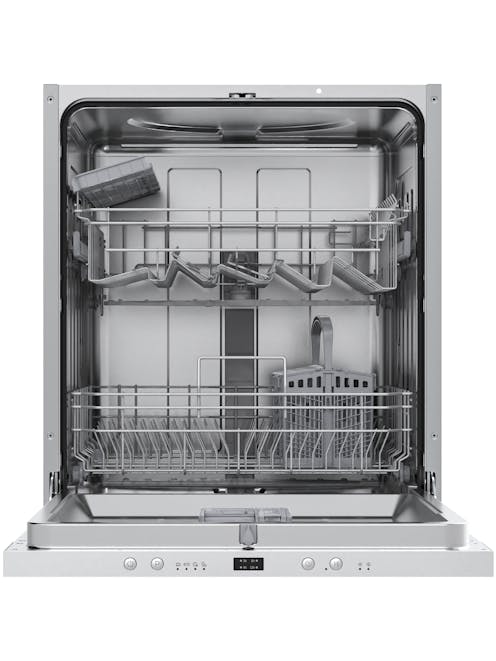
For larger households, the MyAppliances ART28010 60cm Built-In Dishwasher is a practical option with a spacious interior and flexible loading for everyday use.
When Should You Rinse Dishes?
Although pre-rinsing is not usually necessary, there are a few situations where a quick rinse can still help:
- If food has been left to dry on plates for several days.
- If dishes have thick, sticky residue like porridge or mashed potato.
- If you are not planning to run the dishwasher straight away and want to reduce odours.
- If your dishwasher filter tends to clog easily.
Even then, a light rinse or scrape is normally enough. There is no need to wash dishes fully before loading them.
How to Load Your Dishwasher for Better Results
Loading your dishwasher properly can make a big difference to cleaning performance. A few simple habits can help you get better results from every cycle:
- Scrape food waste into the bin before loading.
- Place plates, pans and larger items on the lower rack.
- Put glasses, mugs and lighter items on the upper rack.
- Make sure the spray arms can move freely.
- Avoid overcrowding so water can circulate properly.
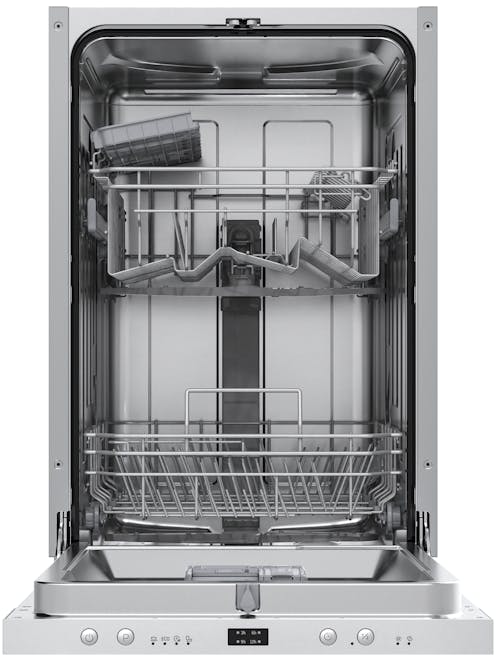
If space is tight, a slimline model can still give you excellent cleaning performance. The MyAppliances ART28009 45cm Built-In Dishwasher is ideal for smaller kitchens while still offering the convenience of an integrated design.
The Bottom Line
In most cases, you do not need to rinse dishes before loading the dishwasher. Simply scrape off larger food scraps and let the machine do the rest. Modern dishwashers are designed to handle everyday mess efficiently.
Skipping the pre-rinse can save time, reduce water waste and still leave you with clean, fresh dishes after every cycle.
Browse our full range of integrated dishwashers to find the right model for your kitchen.